
12 hr
Galle & Bentota Day Trip from Colombo
Full-day coastal escape to turtle hatcheries, mangrove rivers, and historic Galle Fort.
Reserve
Hand-picked by our editors — only the best 5 experiences from 48 reviewed.
Verified partners for every tour, free cancellation where available, and instant confirmation on every booking.
12 hr
Full-day coastal escape to turtle hatcheries, mangrove rivers, and historic Galle Fort.
Reserve
12 hr
Full-day group tour from Colombo: turtle hatchery, river safari, moonstone mine and Galle Fort.
Reserve
9 hr
A day of mangroves, turtles, cinnamon and colonial charm along Sri Lanka's southern coastline.
ReservePrices from verified partners. Availability updates in real time at checkout. Free cancellation policies apply where shown.
The landmarks, rooms, and views travelers on this tour remember — all visible on a single visit.
Witness the traditional craft of peeling cinnamon bark and sample fresh cinnamon tea in a scenic island setting.
A serene Buddhist temple located on a small, tranquil island featuring a historic bodhi tree.
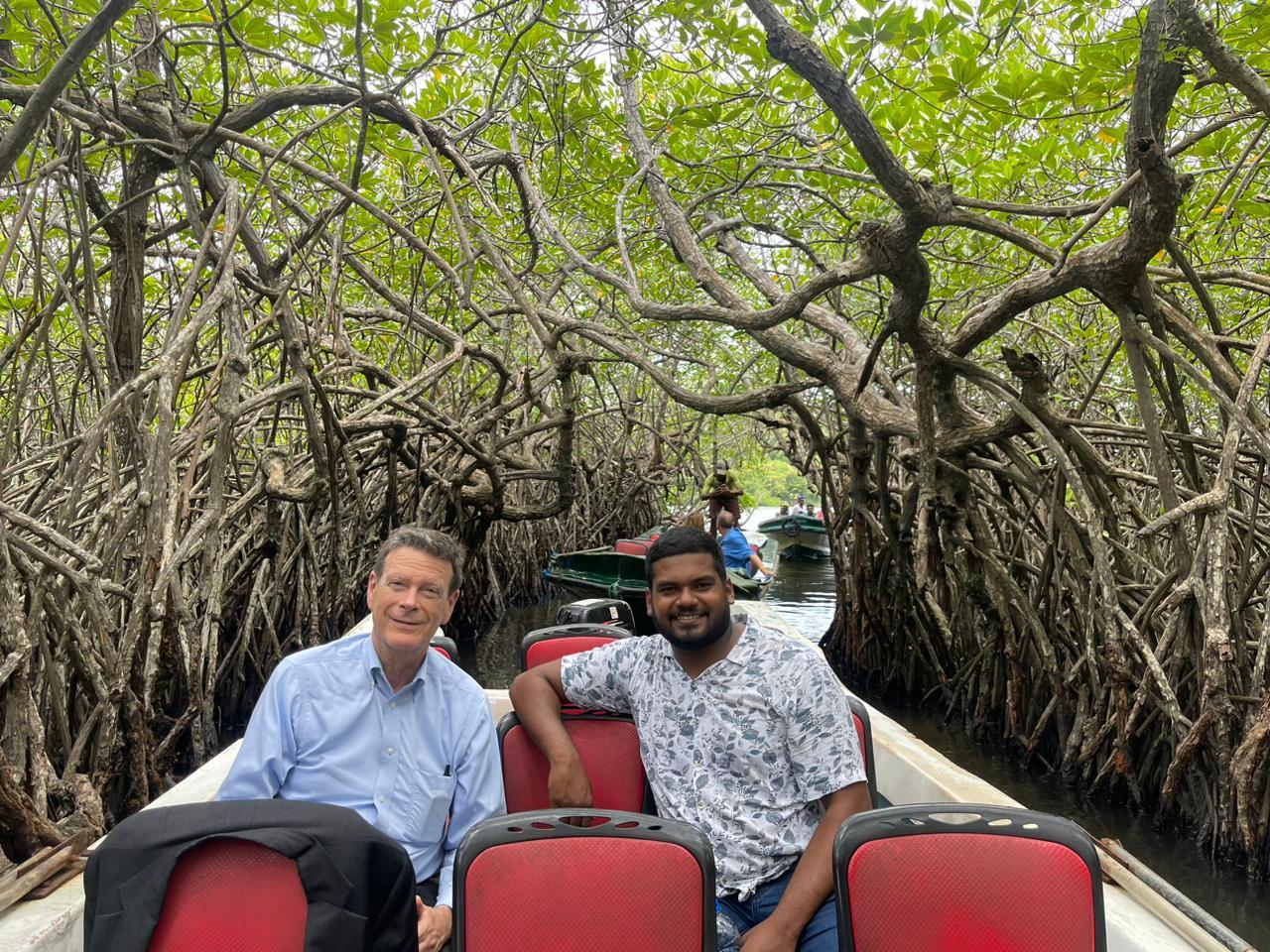
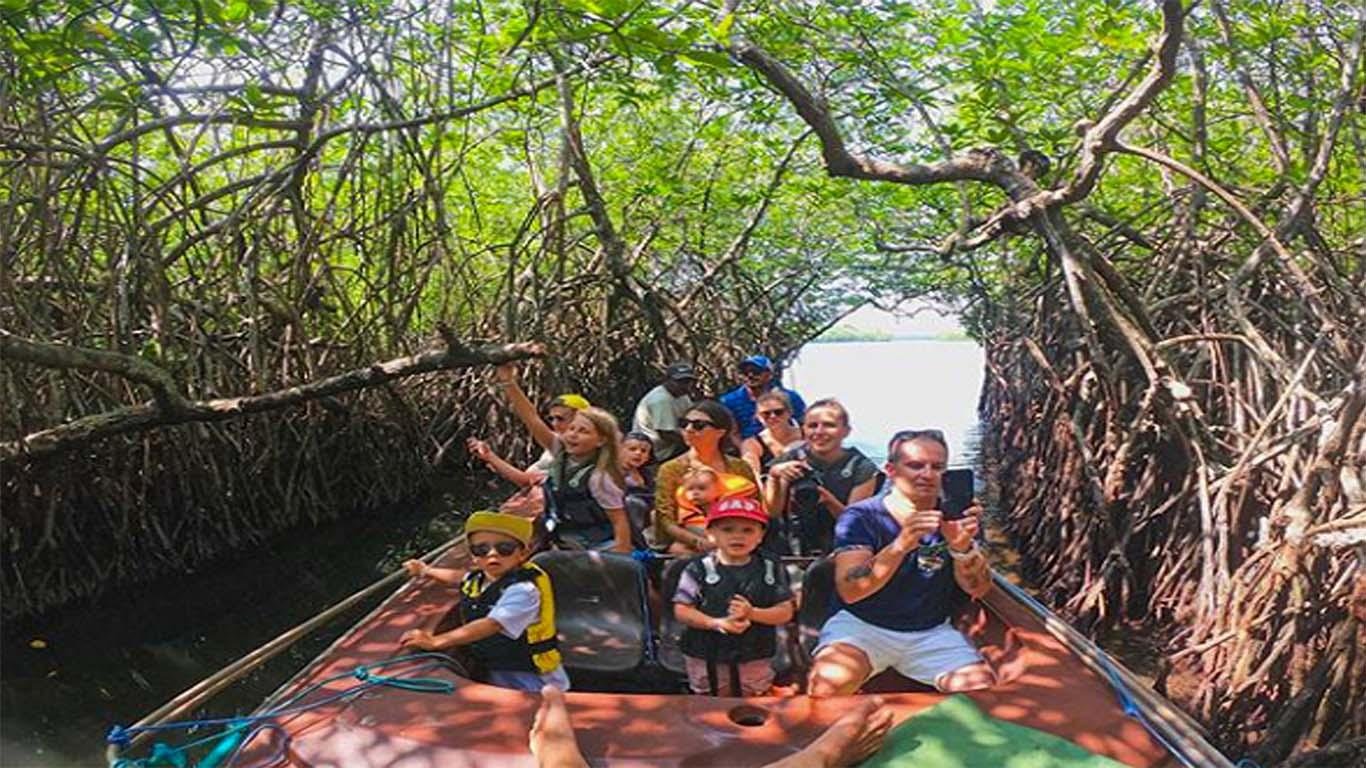
Glide through dense, naturally formed archways created by sprawling mangrove roots.
An immersive, natural fish spa where visitors can experience therapy in the river shallows.
The largest island in the river, connected to the mainland by a 330-meter bridge, showcasing local village life.
Madu River offers a serene, ecologically diverse environment for nature enthusiasts, while the Bentota River provides a more accessible, water-sports-oriented experience for casual travelers. Those seeking an intimate madu ganga boat safari booking tour often find the quieter, Ramsar-designated wetlands more rewarding than the busier, developed banks of Bentota.
| Feature | Top pick Madu River | Bentota River |
|---|---|---|
Biodiversity |
High (Ramsar wetland) | Moderate (River mouth focused) |
Mangrove Density |
Dense tunnel networks | Sparse to moderate |
Visitor Traffic |
Low to moderate | High |
Experience Type |
Nature and culture focused | Activity and water-sport focused |
Key Island Stops |
Multiple (e.g., Kothduwa) | Limited (mainly Cinnamon Island) |
| See tickets → |
Verdict: Choose the Madu ganga boat safari booking tickets for a tranquil journey through protected estuaries, or select Bentota if you prefer proximity to coastal resorts and varied river-based activities for your madu ganga boat safari booking tours.
Choose your ticket, select your date, and reserve in under two minutes. Secure checkout handled by our verified partner.
Instant confirmation by email, with a mobile voucher you can save offline. No printing, no queuing at a collection desk.
Arrive at the entrance, show your voucher on your phone, and walk in. Most tickets include priority or skip-the-line access.
Practical details for your visit straight from our verified partners — hours, access, rules, and how to get there.
Nandana Samagi Mawatha, Balapitiya
Main access point for registered boats.
Buses from Galle or Colombo stop near Balapitiya, followed by a short tuk-tuk ride to the jetty.
Private car services provide direct door-to-door transit to the jetty location.
Modest clothing is recommended when visiting religious island sites, covering shoulders and knees. Lightweight, breathable fabrics are ideal for the tropical climate.
Smaller bags are preferred as boat space is limited. There are no secure lockers at the Madu River jetty, so keep valuables on your person.
Photography is encouraged throughout the boat tour, especially within the mangrove tunnels. Please respect privacy when photographing local residents on the islands.
Many boats used for the Madu River excursion are flat-bottomed and can accommodate guests with limited mobility. Please inform your operator in advance so they can assign a boat with easier access.
Mobile signal is generally reliable along the main river channels. Ensure your device is fully charged for capturing images during the safari.
The boat trip is highly suitable for families, offering a calm and educational journey. Life jackets are provided for all children regardless of age.
Refreshments like cinnamon tea are often served during the demonstration on Cinnamon Island. You are encouraged to bring a reusable water bottle to stay hydrated.
Pets are strictly prohibited on all boat safari vessels to protect the sensitive local ecosystem.
The Madu River is a protected Ramsar site; please ensure you do not leave any waste behind. Arriving early provides the best opportunity to see water monitors and monkeys.
Nandana Samagi Mawatha, Balapitiya
Main access point for registered boats.
Get directionsBest time to go, insider tips, nearby landmarks, and the cancellation fine print — flip through to skim what matters to you.
How crowds, weather, and events shift across the year.
The dry season offers the most reliable weather for boat trips and optimal bird watching. Temperatures are comfortable, and water levels are stable.
Characterized by occasional tropical showers; boat safaris are still possible, though morning departures are highly recommended to avoid rain.
Small details that turn a good visit into a great one.
Travel in the early morning for the best chance to see monitor lizards and birds. The stillness of the water at this hour creates better visibility for wildlife sightings.
Even on overcast days, the tropical sun can be strong. Wear a hat and apply high-SPF sunscreen before boarding your boat.
Purchase cinnamon products directly from the growers on the island to support the local economy. Always ensure your boat operator is registered.
Non-bookable sights within a short walk — free to visit, easy to pair.
A conservation site dedicated to protecting endangered sea turtle species through education and release programs.
A wide, scenic stretch of golden sand popular for swimming and water sports.
Flexible, no hidden fees.
For a full refund, cancel at least 24 hours before the scheduled departure time. The conservation fee is included in standard booking rates.
Hand-picked options within walking distance — pick a district for vibe, or a specific hotel for convenience.
High-end villa accommodations with direct water views.
Intimate stays offering proximity to the river entry point.
Comfortable, locally-owned rooms near the town center.
Madu Ganga covers roughly 915 hectares, and some 770 of those hectares are water. Within that small compass sit 64 islands, fifteen of them inhabited. The estuary lies at Balapitiya, in Sri Lanka's Southern Province, where the river turns brackish before it meets the Indian Ocean. Sri Lanka declared the wetland a Ramsar site in 2003. Two narrow canals tie it to neighbouring Randombe Lake, so the system behaves as one body of water rather than two. Most Madu Ganga Boat Safari Booking tours trace that connection, though the route is far older than any itinerary. The wetland holds one of the island's last substantial mangrove stands. Fourteen of Sri Lanka's twenty-four true mangrove species grow here, their stilt roots stitching the shallows together. Botanists have recorded more than 300 plant species across the islands. Water monitors bask on fallen trunks. Kingfishers work the margins; cormorants dry their wings on bamboo stakes. Those stakes belong to the fishermen, whose brush-park traps follow a design that predates engine power. Mangrove belts here also absorb surge, and post-2004 surveys credited such fringes with reducing damage inland along parts of this coast. The lagoon remains a working waterway rather than a preserved one. Cinnamon built the district's economy. Dutch administrators turned the bark trade into a monopoly in the seventeenth century, and the peeling knives never left. Smallholdings on the islands still strip, roll and dry quills by hand, and the smell of fresh bark carries across open water. Kothduwa Raja Maha Viharaya occupies an island of its own, reached by a short path over water. Local tradition ties the temple to a sacred Bodhi sapling brought south for safekeeping, and to the custody of relics during unsettled centuries. Its shrine room is plain: whitewashed walls, a seated Buddha, lotus and jasmine left on the step. What distinguishes මාදු ගඟ is scale. The channels narrow to arm's reach inside the mangrove tunnels, where the canopy closes overhead and the light turns green. Beyond them the lagoon opens into sheets of water wide enough to lose the shoreline. That alternation, tunnel to open estuary and back, is the geography Madu Ganga Boat Safari Booking tickets exist to reach. It is also why Balapitiya sits on most lists of southern Sri Lanka landmarks.
"The lagoon remains a working waterway rather than a preserved one."
A step-by-step walkthrough of the visit — what you'll see, how long each stage takes, and the details that matter.
You reach the jetty at Balapitiya between 06:00 and 10:00, when mist still sits on the water and the heat has not arrived. The boatman hands you a life jacket, pushes off, and keeps the throttle low past the first line of fishing stakes. Cormorants lift. The lagoon widens until both shores sit far enough away to feel like sea, then the channel narrows again and the engine drops to idle. You duck. The mangrove tunnel is barely wider than the hull, and branches brush the gunwale as the boatman poles through. For two or three minutes you hear only water, roots knocking against fibreglass, and birds you cannot see. Then you come out into glare. On Cinnamon Island you watch a peeler shave bark from a cut stem in one unbroken ribbon, roll it into a quill, and hold it out for you to smell. Later you sit on a plank with your feet in a tank of small fish and let them do the work. At Kothduwa you leave your sandals at the gate and walk a shaded path to the shrine room, where the floor is cool and someone has left jasmine on the step. Back on the water, the boatman points out a water monitor laid flat along a branch, then turns for the jetty. A Madu Ganga Boat Safari Booking tour ends the way it starts, with the hull nudging the same timber. A Madu River lagoon cruise leaves salt on your arms and cinnamon on your hands.
The Madu River boat safaris are open daily from 06:00 to 18:00.
Yes, the conservation fee is 20 USD per foreign adult for a standard boat safari.
A standard boat safari tour typically lasts between 1.5 and 2.5 hours.
There are no specific age restrictions, making it an excellent activity for all ages.
Yes, the Madu River boat safari is highly recommended for families and is very child-friendly.
Booking in advance is highly recommended, especially during the peak season from November to April, to ensure availability.
Most boat operators will provide umbrellas or adjust the schedule; check with your specific operator regarding their rain policy.
Prohibited items include alcohol, drones, and single-use plastics to protect the sensitive wetland environment.
Yes, many visitors combine their river tour with a visit to the nearby Kosgoda Turtle Hatchery or a day trip to Galle.