
English| EUR
Suggested for you
More currencies
Choose a language
The Madu Ganga wetland ecosystem draws visitors for its mangrove channels, water monitor sightings, and traditional boat operators who navigate the lagoon's 64 islands. This guide covers the logistics you need before booking: when the river is calmest, what the standard fee includes, and how to plan your visit.
Quick answer
Madu Ganga boat safari in Balapitiya operates daily from 06:00 to 18:00, with a standard entrance fee of 25 USD per foreign adult covering conservation contributions and boat operator costs. The river is calmest and wildlife most active between 06:00 and 08:00, making early morning the recommended arrival window. Boats depart continuously throughout the day from the main jetty on Nandana Samagi Mawatha in Mahaladuwa.
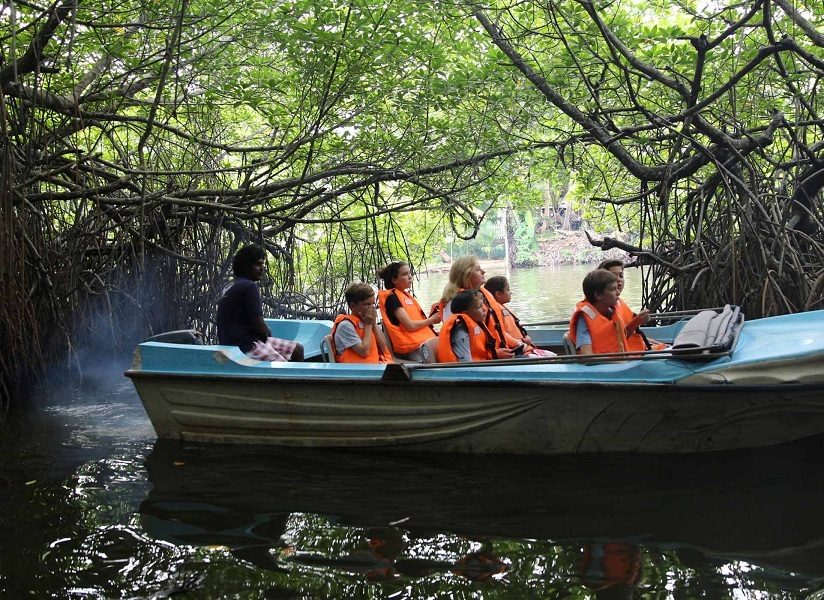
The Madu Ganga estuary holds the largest mangrove ecosystem along Sri Lanka's southern coast, where brackish water supports over 300 plant species and a resident population of water monitors, fishing cats, and purple herons. The river's name derives from the Sinhala word for honey—madu—a reference to the wild bee colonies that once thrived in the mangrove canopy. A madu ganga boat safari balapitiya typically follows a two-hour route through narrow mangrove tunnels and open lagoon stretches, stopping at a cinnamon island where processors demonstrate traditional bark-peeling methods and at a small Buddhist temple on one of the forested islets. Boat operators pole through shallow sections to minimize engine noise, which increases the likelihood of spotting basking crocodiles and kingfisher species along the banks. The wetland's biodiversity peaks during the post-monsoon months when migratory waders join resident species, though the river safari operates year-round. Water levels fluctuate with tidal cycles, and morning departures coincide with higher water, allowing boats to access the narrowest channels where egrets and cormorants nest. The conservation fee supports mangrove restoration projects managed by local community groups, who also regulate boat traffic to prevent erosion along the fragile root systems. Most visitors combine the boat safari with stops at nearby Hikkaduwa or Galle, both within 30 kilometers of the Balapitiya launch point. The site attracts fewer crowds than the southern coast's beaches, particularly on weekdays, and the operators maintain a no-loudspeaker policy to preserve the wetland's acoustic environment.
“The Madu Ganga estuary holds the largest mangrove ecosystem along Sri Lanka's southern coast, where brackish water supports over 300 plant species.”
The optimal time to experience the Madu Ganga boat safari is during the early morning window of 06:00–08:00. Arriving during this period ensures the calmest water conditions and peak wildlife activity.
Dry, 27°C–30°C
Ideal weather conditions for navigating the river channels and viewing mangrove ecosystems.
Transitional, 26°C–29°C
These shoulder months offer fewer crowds and pleasant conditions for boat travel.
High humidity, 25°C–28°C
Periodic rainfall occurs, though morning safaris typically remain viable before mid-day heat.
Verdict: The best slot is arriving between 06:00–08:00 from January to March for the most consistent weather and wildlife visibility.
The Madu Ganga boat safari in Balapitiya operates on a consistent daily schedule throughout the week.
The Madu Ganga boat safari launch point is located at Nandana Samagi Mawatha, Mahaladuwa, in Balapitiya. It is most easily accessible via the A2 Southern Coastal Highway, which connects major tourist hubs in the Southern Province to the Balapitiya area.
Coastal Line to Balapitiya Railway Station
Route 32 (Colombo-Galle) to Balapitiya Bus Stand
A2 Southern Coastal Highway to Nandana Samagi Mawatha
Direct transfer to Nandana Samagi Mawatha, Mahaladuwa
If arriving by car or taxi, head directly to Nandana Samagi Mawatha in Mahaladuwa where designated parking is available near the launch site. Using a GPS-enabled map to input the specific street address is recommended to navigate the local access roads accurately.
A few deliberate choices in the days before your trip, and a small kit on the morning itself, make the difference on an open boat.
Everything you need to know about madu ganga boat safari balapitiya
The best arrival window is 06:00–08:00 when the river is at its calmest and wildlife is most active. Visiting early helps you avoid the midday heat and larger crowds during your experience.
The entrance fee is 25 USD per foreign adult, which covers standard conservation and boat operator costs. Please note that this fee supports the maintenance of the river ecosystem.
The departure point is located at Nandana Samagi Mawatha, Mahaladuwa, Balapitiya, Sri Lanka. You can easily navigate to this address using local transportation or private taxi services.
The river is a designated wetland home to diverse mangroves, monitor lizards, various exotic birds, and occasionally even estuarine crocodiles. Observing these creatures in their natural habitat is the highlight of the journey.
The facility is open daily from 06:00–18:00, including weekends and public holidays. You may schedule your arrival at any time within this operating window.
Yes, these river trips are generally safe and enjoyable for families with children of all ages. Life jackets are provided on all vessels to ensure passenger safety throughout the trip.
We recommend bringing sun protection, insect repellent, and a camera to capture the mangrove vegetation and scenery. Comfortable clothing and water are also advisable for your time on the water.
The launch site is accessible via the main road network in Balapitiya. For specific directions or transport arrangements, you can reach out to the operators via +94 715946050.
Madu Ganga Boat Safari Price Per Person
Read more Tickets & toursMadu Ganga Boat Safari Packages
Read more Tickets & toursMadu Ganga Boat Safari Pricing
Read more Tickets & toursBook Your Madu Ganga Boat Safari
Read more GuideMadu Ganga Boat Safari Balapitiya Reviews
Read more GuideMadu Ganga Boat Safari Timing
Read more